SMiL at Discover Mānoa 2025

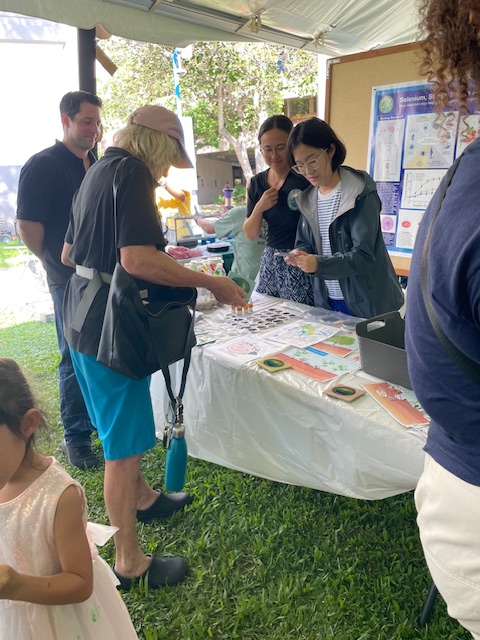
Our lab participated in the 2025 Discover Mānoa on November 15! We had a table showcasing how soil and its microbiome are amazing. Simon and Hans prepared Petri dishes with bacterial and fungal colonies; Xiaoding and Aaron designed carbon and nitrogen cycling clip art; we also ran the experiment of adding hydrogen peroxide to life vs. sterile soils to see how microbial enzymes in soil can make hydrogen peroxide bubble! What a fun day among all the amazing exhibits!

Hans presented at C-MĀIKI M4 seminar series!

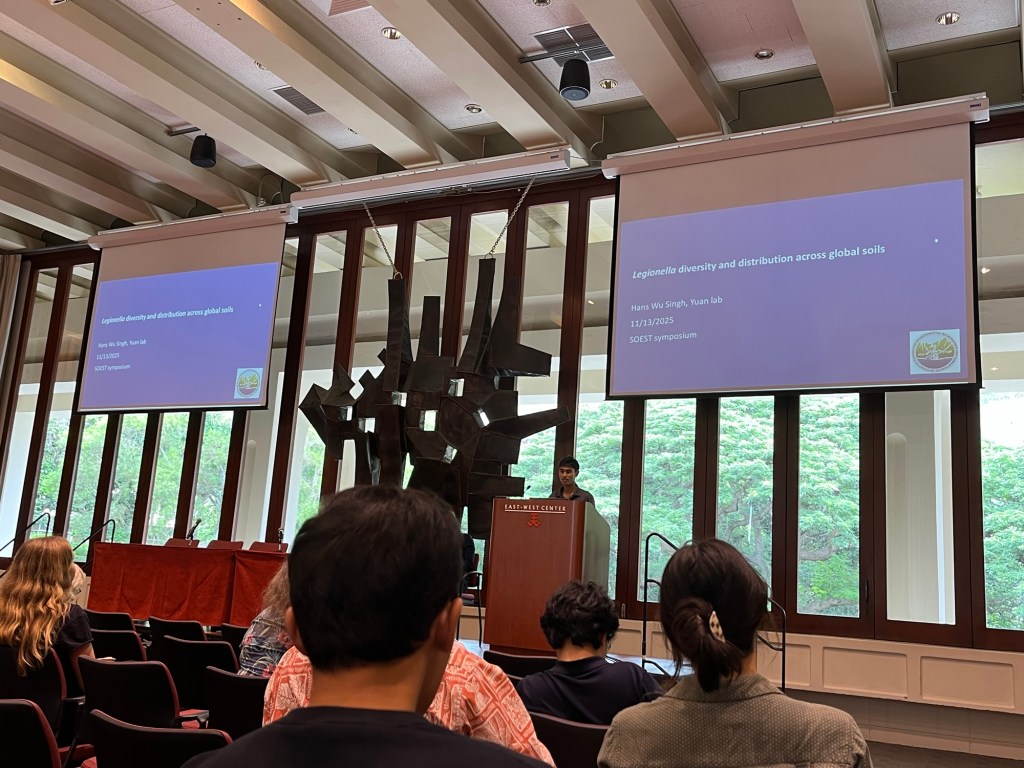
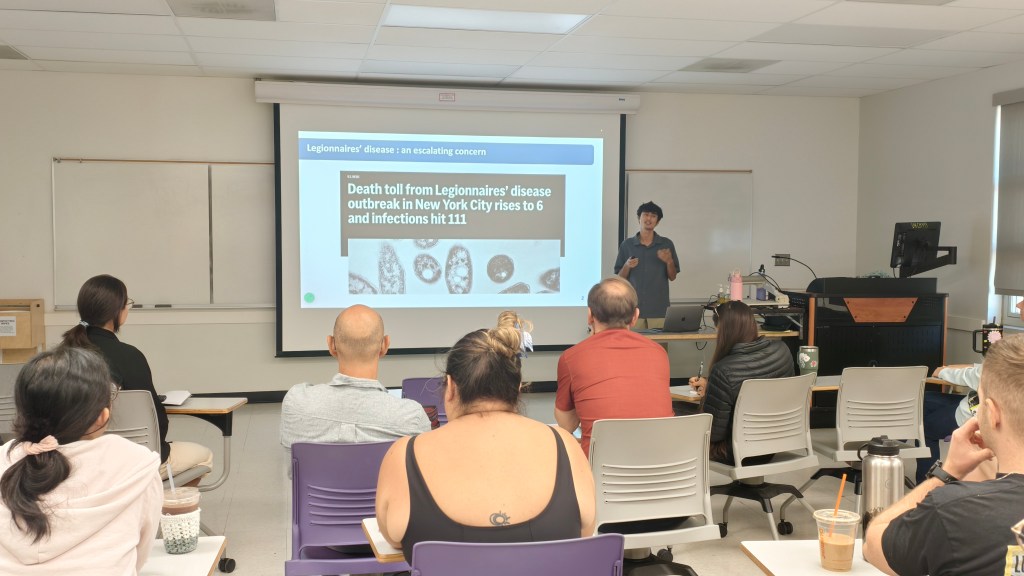
Dr. Hans Singh delivered his talk titled “A Global Analysis of Legionella Distribution and Diversity Across Soils” at the C-MĀIKI M4 seminar on Oct 29th, 2025. Hans introduced why a global analysis is a good idea to assess Legionella’s distribution along environmental gradients across continents, and presented his bioinformatic tools to gather 4000+ soil microbiome into one picture! The audience had passionate discussion after the talk.

Simon delivered poster presentation at UROP’s SURE Symposium

Undergraduate student Simon Lee worked hard the entire summer 2025 isolating Legionella from soil, water, and air near the Mānoa Stream. He presented his poster “Isolation, Identification, and Enumeration of Legionella spp. From Environmental Samples” at UROP’s SURE Symposium on August 2nd. Great job Simon!

Simon will stay in the lab for the Fall 2025 semester and keep refining the protocol to isolate environmental Legionella.

Welcome Dr. Hans Singh!

Dr. Hans Singh joined us as a postdoc to lead our Legionella project! He came from Dr. Paul Jensen’s lab in the Scripps Institute of Oceanography, now ready to apply his expertise in environmental microbiology, natural product and metaanalysis to explore soils in Hawaiʻi. Welcome Hans!

Legionella project kick-off

Our Microbiome COBRE research project on environmental Legionella has been approved by NIGMS! We will explore the diversity and distribution of Legionella, a bacteria genus containing disease agent causing legionellosis, in terrestrial environments of O’ahu. The aim is to identify predictors of Legionella persistence among climate, edaphic conditions, and host protists abundance.